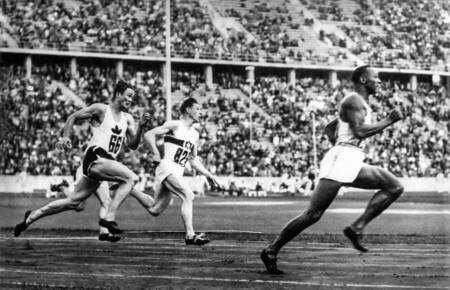
Avksenty (Avksendi) Cezarevich Puni (1898 – 1986) was one of the most influential Soviet sports psychologists, whose work shaped how sprint performance was understood and trained in the USSR. Rather than viewing speed as a purely physical quality, Puni approached sprinting as a psychophysiological skill, where the nervous system, emotional state, and motor coordination play a decisive role.
Although Puni did not develop a “sprint theory” in the modern biomechanical sense, his principles emphasizing willpower and mental preparation became foundational for sprint coaching and remain highly relevant today.
1. Psychoregulation and Speed
Puni emphasized that maximal sprinting requires optimal regulation of arousal, attention, and emotional activation.
Excessive tension leads to stiffness, disrupted rhythm, and reduced stride frequency.
Insufficient activation results in weak force application and poor reactivity.
Peak performance occurs in a narrow zone of controlled intensity, often described as calm aggression.
For sprinters, learning how to enter this optimal state before each maximal effort is as important as physical preparation.
2. Volitional Readiness
A central concept in Puni’s work is motor–volitional readiness
(κινητική–βουλητική ετοιμότητα).
This refers to the athlete’s ability to instantaneously mobilize the nervous system and neuromuscular power on command. In sprinting, this is expressed through:
▪︎ explosive reactions at the start
▪︎ immediate coordination of arms, legs, and trunk
▪︎ stable rhythm under competitive pressure
▪︎ high CNS drive during acceleration and maximum velocity
Speed, in this sense, is not only produced by strength, but by the athlete’s ability to decide and execute instantly.
3. Pre-Start States
Puni classified pre-start psychophysiological states into three categories:
▪︎ Optimal readiness – ideal for sprint performance
▪︎ Hypoactivation – low arousal, delayed reactions, weak acceleration
▪︎ Hyperactivation – excessive nervousness, stiffness, loss of coordination
Soviet sprint training placed strong emphasis on routines and drills that guided athletes into the optimal pre-start state before each repetition or race.
4. Psychomotor Coordination
According to Puni, sprint speed is limited not only by physical capacity, but by the ability to create, stabilize, and reproduce precise motor patterns at very high speeds.
This idea anticipates modern sprint concepts such as:
▪︎ technical consistency under speed
relaxed stiffness
▪︎ rapid limb cycling
▪︎ minimal braking forces
▪︎ automatic rhythm at maximum velocity
For this reason, Puni emphasized high-quality repetitions over high volume.
5. Mental–Technical Integration
Puni summarized sprint performance as:
“A unity of neuromuscular power and mental control.”
As a result, Soviet sprint systems widely applied:
▪︎ visualization of sprint rhythm
▪︎ breathing regulation
▪︎ short cue words
▪︎ mental rehearsal of acceleration and transition phases
These methods foreshadowed modern ideas such as flow state, mental anchoring, and rhythm-based sprinting.
Conclusion
Puni’s contribution to sprint training can be summarized in four key points:
▪︎ Maximal speed requires optimal nervous system regulation.
▪︎ Sprinting is a high-speed psychomotor skill, not just a physical effort.
▪︎ Elite performance depends on instant volitional activation.
▪︎ Rhythm, relaxation, and emotional control are decisive for maximum velocity.
For coaches and athletes, Puni’s work remains a powerful reminder: speed is trained as much through the nervous system and the mind as through the muscles.
References
Puni, A. C. Psychology of Physical Education and Sport (USSR editions)
Verkhoshansky, Y. Supertraining
Zatsiorsky, V., & Kraemer, W. Science and Practice of Strength Training
Schmidt, R., & Lee, T. Motor Control and Learning
Bompa, T., & Buzzichelli, C. Periodization Training for Sports